
Tarot Spreads
Start with your question. Then choose a layout that gives each card a job.
Choose a spread ↓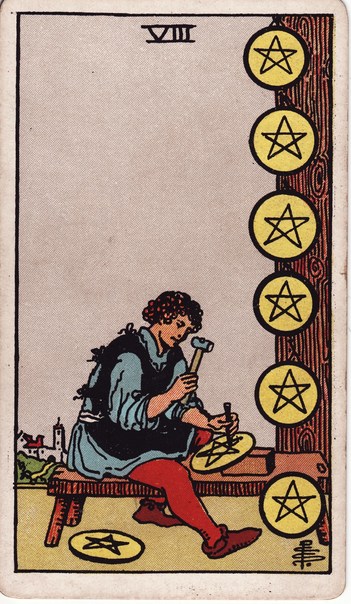
What is a tarot spread?
A spread is a layout with a purpose for each card. If a position is called Challenge, read the card there in terms of what’s getting in the way. In an Advice position, the same card might suggest something you could try.
Pick your positions before you draw. Begin with the smallest layout that gives your question enough room.
One card · Reflection
When you want a single idea to think about. Try asking: “What deserves my attention today?”
- Focus
- Focus. One theme or detail to carry into your day.
Two cards · Keep and change
When something partly works and you want to adjust it. Try asking: “What should I keep doing, and what could I change?”
- Keep
- Change
- Keep. What already supports you.
- Change. One approach you could adjust.
Three cards · Situation, challenge, advice
When you feel stuck and want to identify a next step. Try asking: “What would help me move forward on this project?”
- Situation
- Challenge
- Advice
- Situation. What is happening now.
- Challenge. What is getting in the way.
- Advice. An action or approach to try.
Five cards · A decision with two options
When you’re weighing two real options and want to understand their trade-offs. Try asking: “What should I weigh before saying yes to this commitment?”
- Priority
- Option A
- Option B
- Missing information
- Next step
- Priority. What matters most in this choice.
- Option A. What the first option asks of you.
- Option B. What the second option asks of you.
- Missing information. Something you can find out before deciding.
- Next step. One action you can take now.
One question, three cards, one next step
Question. What would help me finish a first draft this week?
- Situation · Eight of Pentacles
You’re building a skill through steady practice.
- Challenge · Two of Swords
You’re still deciding which opening to use.
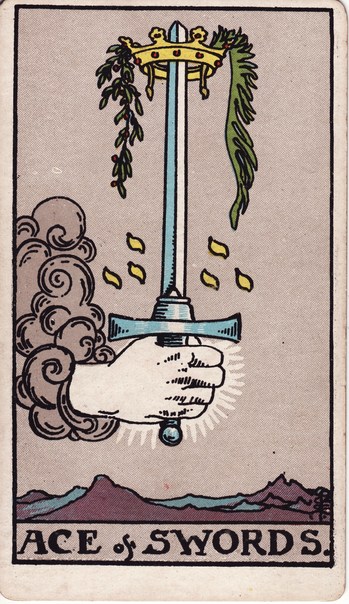
- Advice · Ace of Swords
Write one plain sentence that states the main idea.
Read them together. The block is choosing a direction. Write a one-sentence opening and work from it for twenty minutes. You can revise it after there’s a draft.
Seven cards · Horseshoe
When a situation has several moving parts and you want to see what could shift it. Try asking: “What would help me get a stalled collaboration moving again?”
- Past influence
- Present
- Unseen factor
- Obstacle
- Outside influence
- Response
- Likely direction
- Past influence. What still shapes the situation.
- Present. What is happening now.
- Unseen factor. Something that deserves a closer look.
- Obstacle. Where the situation is getting stuck.
- Outside influence. A person or condition you need to account for.
- Response. A choice or action within your reach.
- Likely direction. Where things may go if the current pattern continues.
Read the cards together. Read the obstacle beside the unseen factor. Then compare the outside influence with your response to see where you have room to act.
Ten cards · Celtic Cross
When a broad question calls for context, outside perspectives, and a sense of where things are heading. Try asking: “What should I understand before deciding how to move forward in my work?”
- Present
- Crossing influence
- Foundation
- Recent past
- Conscious aim
- Near future
- Your stance
- Environment
- Hopes and fears
- Likely direction
- Present. The situation at the heart of the question.
- Crossing influence. What complicates or challenges the situation.
- Foundation. The underlying pattern or need.
- Recent past. An influence that is beginning to recede.
- Conscious aim. What you hope to achieve or have been thinking about.
- Near future. What may take shape next.
- Your stance. How you are approaching the situation.
- Environment. The people or conditions around you.
- Hopes and fears. What you want or worry might happen.
- Likely direction. Where the situation may lead if present conditions continue.
Read the cards together. Start with the present and crossing influence. Compare the foundation with the conscious aim, then use cards 7–10 to check whose expectations shape the likely direction.
When would I use a larger spread?
A ten-card Celtic Cross can help you examine several parts of a broad situation, including its background, outside influences, and possible direction. Give yourself time to read the positions in groups and write one clear takeaway at the end.
If you still feel unsure about a smaller spread, reread your question and check what each position asks. Write a tentative interpretation before drawing another card.