What can Tarot bring to your life?
Tarot can be a way to understand yourself, explore your spiritual beliefs, make room for creativity, and enjoy learning something new. You might begin with a question about a relationship or a change at work. You might also begin because an image interests you. Both are good reasons to pick up the cards.
A reading brings your attention to a set of images and meanings. Your response is part of the experience: what feels familiar, what surprises you, and what you want to explore further. With an ongoing practice, you have time to develop that understanding and try ideas in everyday life.
Here are six ways to make Tarot useful and enjoyable, with simple examples you can try.
1. Personal Development
The cards give you a starting point for examining your values, strengths, and habits. A reading can help you put a question into words and consider a reaction you usually take for granted. What do you want to change? What is already working? What matters enough to give it more attention?
For example, the Ten of Wands is often associated with responsibility and carrying a heavy load. In a reading about work, it could prompt you to examine which tasks are yours and which you have taken on without discussing them. You can then choose a specific action, such as asking for help or renegotiating a deadline.
Try it: Ask about a habit you want to understand. Choose one practical change to try, then note what you learn. Your experience gives you something concrete to compare with the reading.
2. Spiritual Growth
If spirituality is part of your life, Tarot can provide a regular time to explore your beliefs and sense of purpose. The imagery can offer a focus for meditation, prayer, or quiet consideration of a question that matters to you. You decide how the practice fits your beliefs.
The Hermit, for example, may invite you to consider solitude, study, or the guidance you seek. You might spend a few minutes asking what deserves your attention when outside demands become quieter. Another person may connect with the same image differently.
Try it: Choose a card and spend a few quiet minutes with it. Consider what it brings to mind about meaning, purpose, or your spiritual life. There is no required belief system or correct personal response.
3. Intuition & Self-Trust
Before looking up a card, notice your first response. A gesture, expression, color, or small detail may catch your eye. Naming that response lets you take part in interpreting the card instead of relying entirely on someone else’s explanation.
Then compare your impression with the established meanings and the question you asked. Sometimes they connect easily. Sometimes the interpretation challenges your first assumption. Making room for both helps you practice curiosity and judgment together.
Try it: Write one sentence about a card before reading its meaning. Afterward, ask what you would keep, add, or reconsider. Self-trust includes being willing to change your mind when you learn something new.
4. Choices & Relationships
A spread can separate a complicated situation into smaller questions: your needs, the challenge, the options, and an action you could take. That structure gives you a way to examine each part without having to solve everything at once.
In a relationship reading, you could explore what you want to communicate and which boundary needs attention. In a work reading, you could consider the strengths you bring to a new role and the information you still need. Use the reading to prepare questions and conversations; another person’s thoughts are still theirs to explain.
Try it: Ask, “What should I consider before this conversation?” Identify one point you want to express and one question you want to ask. Bring what you learn from the actual conversation back into your understanding.
5. Creativity & Discovery
Tarot offers a collection of characters, settings, conflicts, and possibilities. You can use those images to start a story, explore a character’s motivation, or approach a creative project from a different direction. You do not need a personal problem to have a rewarding experience with the cards.
A writer might draw three cards for a character, a challenge, and a turning point. An artist might work with the colors or composition of one card. If you enjoy studying symbolism, you can also explore how different Tarot traditions connect the cards with astrology and numerology.
Try it: Draw a card and use one detail as the starting point for a short story, sketch, or project idea. Let your interpretation be playful.
6. A Practice to Enjoy
A few minutes with a card can become time you look forward to. Some days you may want a full reading. On others, you may prefer learning about one symbol, comparing interpretations, or talking about the cards with someone who shares your interest.
You can develop your practice at your own pace. Start with the parts you enjoy and leave room for your interests to change. There is no need to complete a reading every day or turn every experience into a lesson.
Try it: Set aside a few minutes when it suits you. Choose one card, explore its meaning, and decide whether you want to keep a note. A short, satisfying practice is enough.
See what you learn over time
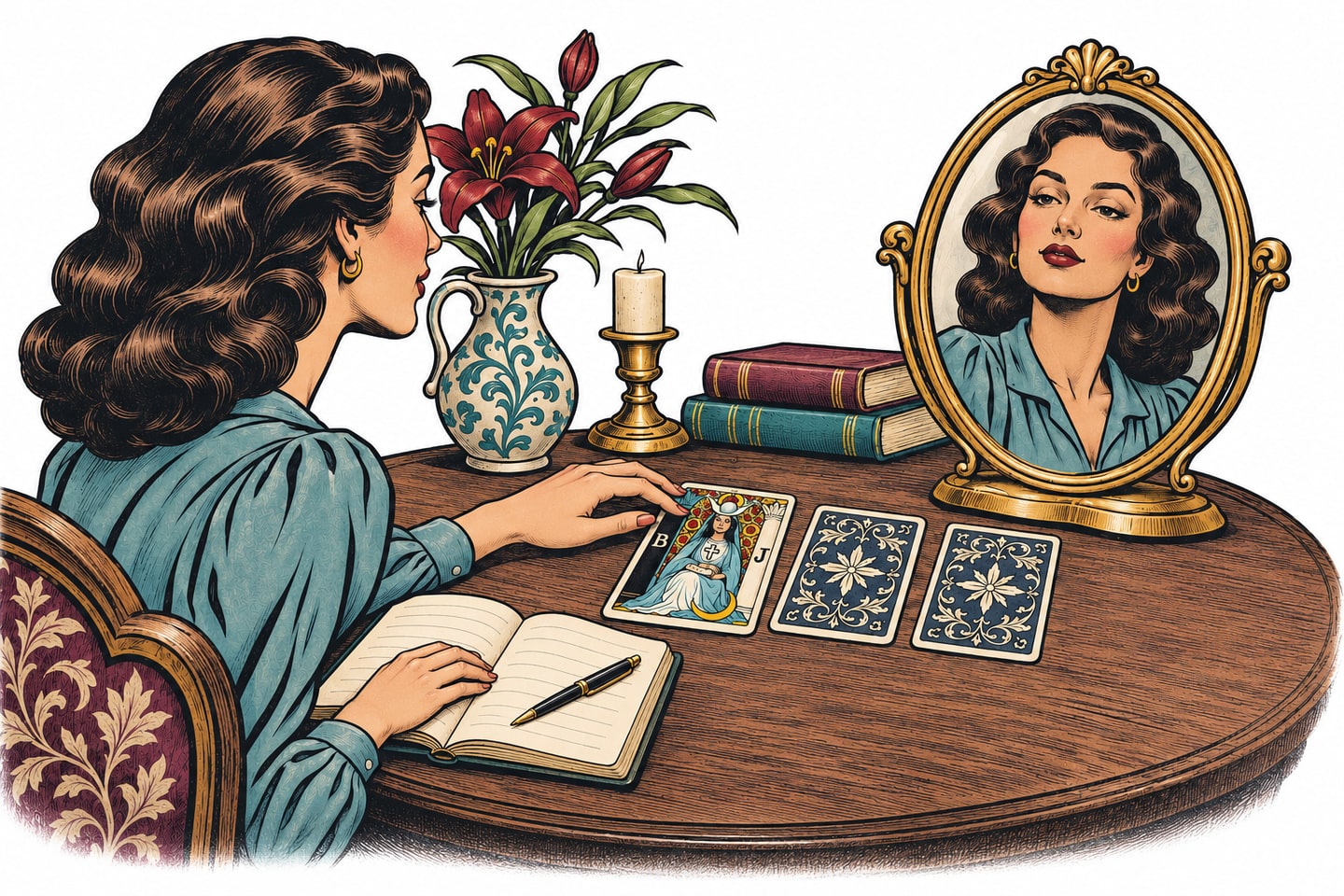
Saved readings let you return to the question, the cards, and the interpretation. A journal entry can add the part only you know: what was happening, what you tried, or how your view changed. You can write as much or as little as you like.
Your free Tarot Learning Lab dashboard also tallies recorded cards and symbols. If a card appears again, open the readings behind the count and compare their context. Repetition tells you what appeared; your questions and experience help you decide whether there is a meaningful connection.
Your journal can include entries attached to readings and entries simply about your day. You can return and update them whenever you want.
Choose your own starting point
Bring a question, choose a general reading, or get to know a single card. Look at the imagery, read the interpretation, and consider what interests you. You can use your own deck or draw cards online.
Our personalized readings use AI alongside established card meanings. They provide interpretations to consider, not guaranteed outcomes. Your judgment remains part of every choice you make.
Whether your interest is personal development, spiritual growth, creativity, or the enjoyment of learning, you can build a Tarot practice that fits your life.